


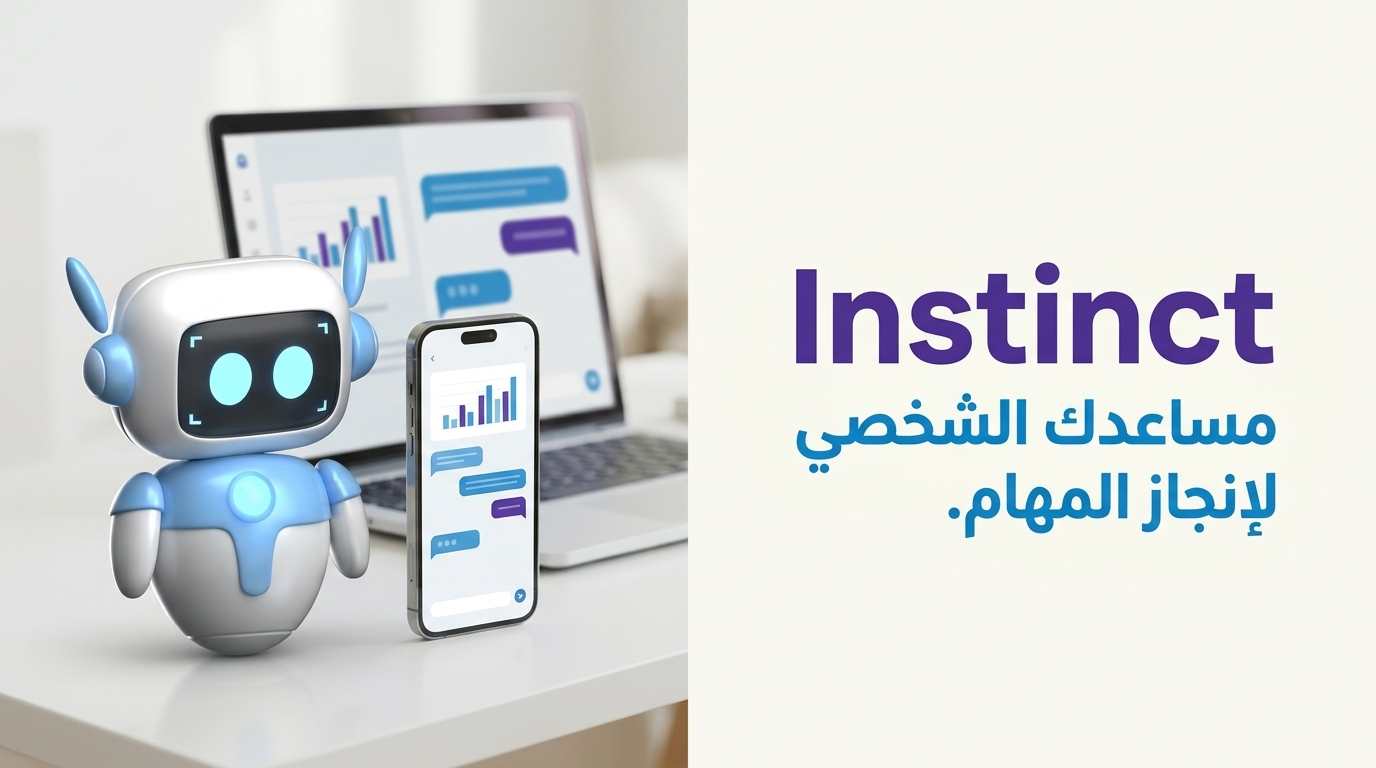

Artificial intelligence is moving beyond answering questions and generating recommendations. A new generation of intelligent agents is emerging, capable of understanding user needs, interacting with digital services, and carrying out tasks on people's behalf.
Instinct is one example of this shift. Rather than offering only a conventional chat experience, it introduces a personal AI assistant that can interact with phones, computers, and connected services to help complete real-world tasks.
What Is Instinct?
Instinct is a personal AI assistant developed by Spear Street Technology. It is designed to understand what users are working on and what matters to them, helping them get things done without requiring them to learn a new application or navigate a complex dashboard.
Users can communicate with Instinct through text messages or calls. According to its official website, it can use a phone and computer in much the same way a person does, interacting with websites, applications, and digital services to carry out requested tasks.
Through connected services and information made available by the user, Instinct can also draw on relevant context, helping it provide assistance that is more closely aligned with individual needs and activities.
Source: Official Instinct Website.
What Can Instinct Do?
Instinct goes beyond answering questions and summarizing information. Its official website highlights practical tasks it can help complete, including:
Shopping: Ordering groceries and sourcing ingredients for a new recipe.
Travel: Finding and booking a train home for the weekend.
Gifting: Selecting and arranging flowers to be sent to a friend.
Activities: Finding a suitable court for the weekend.
Everyday tasks: Helping schedule appointments, research travel, and manage subscriptions.
The process involves understanding the request, using available context and permissions, and interacting with the relevant service to carry out the necessary steps.
How Is an AI Agent Different from a Traditional Chatbot?
A traditional assistant provides an answer or recommendation, leaving the user to complete the steps themselves.
An AI agent can go further. It can understand an objective, plan the required actions, and interact with the tools and services needed to help achieve it.
For example, when a user asks for a product, the task does not have to end with a list of suggestions. An agent may be able to research available options, interact with the relevant service, and help complete the required process.
This is the fundamental shift: from AI that tells you what to do to AI that helps you get it done.
Why Trust, Privacy, and Control Matter
As agents gain the ability to perform real actions, privacy, permissions, and human oversight become essential.
Instinct's documentation explains that users can connect selected services, set limits on the assistant's activities, and disconnect connected services. Its Terms of Service also emphasize meaningful human oversight and reviewing actions, with appropriate approval processes for transactions and other actions that may have financial or contractual consequences.
An AI agent can misunderstand an instruction or make an execution error, and some actions may be difficult to reverse. Automation should therefore not mean giving up control over important decisions.
Sources:
Instinct Privacy Policy | Terms of Service.
What Does This Shift Mean for Businesses?
When customers have personal agents capable of researching products, discovering services, and interacting with businesses on their behalf, the way people reach retailers and service providers begins to change.
A customer may simply ask for a running shoe with specific features and a preferred price range. The personal agent can help explore available options, reach relevant stores, and interact with the services those businesses make accessible.
Businesses will therefore need to improve how they present their products and services, organize their information, and provide reliable ways to handle digital requests.
Where Does OmniBot Fit In?
This is where OmniBot becomes relevant as a business platform for managing customer interactions and the operations connected to them.
OmniBot brings communication channels into a unified inbox and provides AI agents, customer relationship management (CRM), workflow automation, task assignment, automated follow-up, and integrations with internal business systems through APIs.
This positions OmniBot as the operational layer on the business side: receiving customer inquiries, organizing requests, routing them to the right teams, and supporting the follow-up process.
A Practical Scenario: The Customer, the Store, and the Personal Agent
Imagine a customer looking to purchase a product from a store in a shopping mall.
The customer asks their personal assistant to find a product with specific requirements.
Instinct helps discover available options and reach relevant stores or services.
The assistant contacts the store through a supported communication channel or business interface.
OmniBot receives the inquiry through the connected channel, provides relevant store information, or routes the request to the appropriate employee.
The store organizes and follows up on the request through its business workflows, with the customer confirming actions that require approval.
The result: Easier discovery for the customer, more organized communication for the store, and requests that can be tracked through the business workflow.
The Future of Interaction Between Personal Agents and Businesses
An important development in this space is the release of version 1.0 of the Personal Agent Protocol, also known as Poppy, in November 2026.
The protocol defines a standard approach for personal agents to interact with businesses through business agents, websites, and APIs. It uses authentication and permission mechanisms that allow customers to control what their personal agents can access and do.
Instinct was named among the protocol's initial design partners, and version 1.0 is now available for businesses interested in implementing it.
This creates an important opportunity for OmniBot: developing structured business interfaces that allow compatible AI agents to retrieve product, inventory, pricing, and service information, submit requests, and track orders within approved permissions.
The release of this protocol does not mean that a direct, ready-made integration between Instinct and OmniBot is currently available. Rather, it represents an emerging opportunity for building this type of integration.
Source: Sierra's Announcement of Personal Agent Protocol 1.0.
Conclusion
Instinct represents an evolution in how people use AI, moving from assistants that provide information to agents that can perform tasks and interact with services on users' behalf.
OmniBot, meanwhile, provides businesses with the tools to manage customer conversations and turn them into trackable requests, tasks, and operational workflows.
As personal agents continue to evolve, a business's ability to organize its data, services, and integration interfaces will become increasingly important in reaching customers and delivering more efficient experiences.
OmniBot | Building a future where customer conversations become organized digital business operations.